
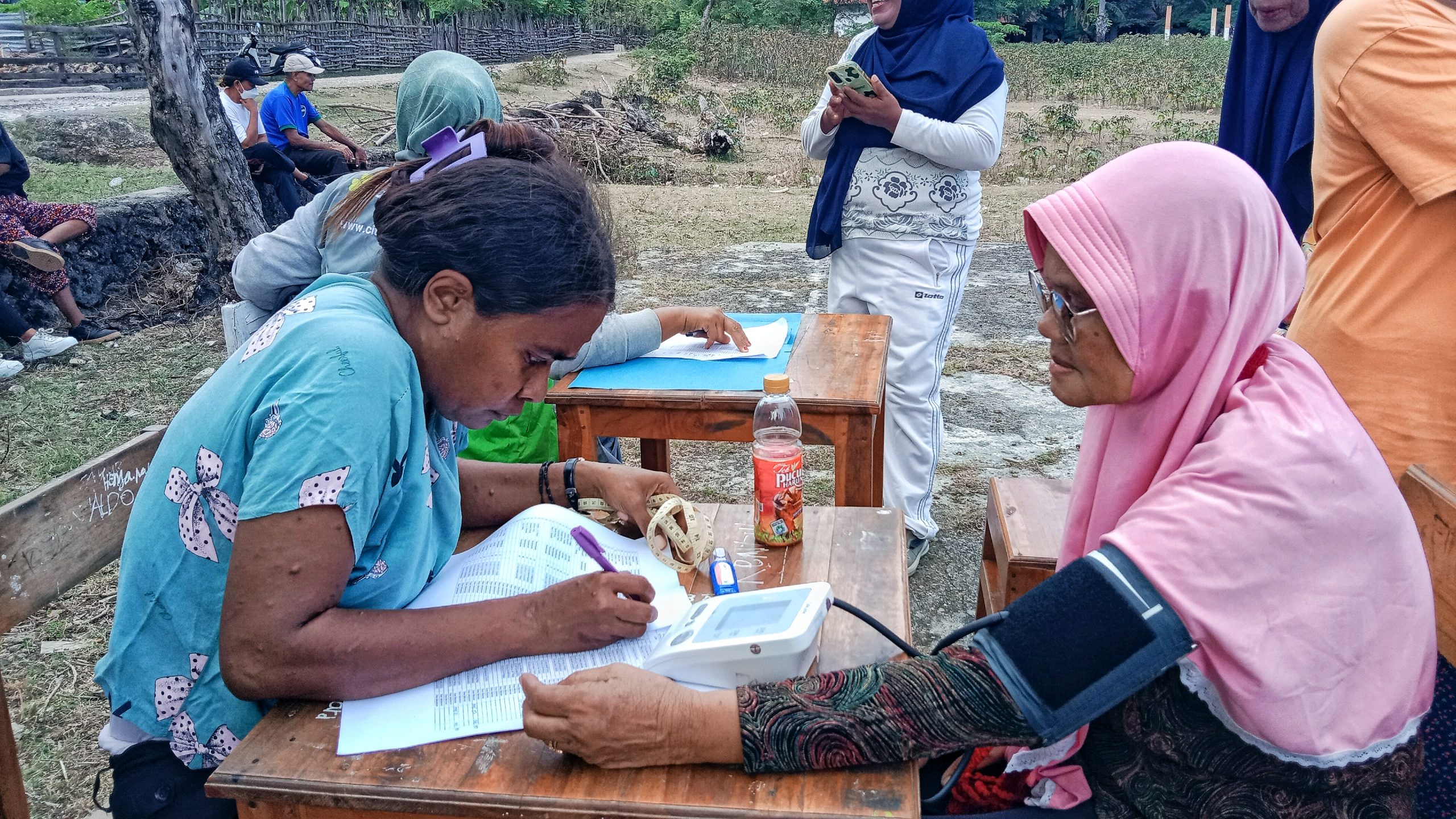
The health sector in Indonesia has shown significant progress over the past three decades. This is marked by an increase in life expectancy, the implementation of UHC (Universal Health Coverage), and a gradual decline in maternal and child mortality rates. However, Indonesia still faces a double burden of disease, with infectious diseases remaining an unresolved problem, while non-communicable diseases such as hypertension and diabetes are rapidly increasing. According to the 2023 Indonesia Health Survey, the prevalence of hypertension among people aged 18 years and older reached 30.8%, and the prevalence of hypertension among people aged 15 years and older reached 11.7%. Meanwhile, the prevalence of tuberculosis, one of the infectious diseases in Indonesia, reached 0.3%, and the prevalence of diarrhea was 2%².
Table 1. Life expectancy in Indonesia in 1990, 2021, and 2050³
| 1990 | 2021 | 2050* | |
| Women | 65,4 | 72 | 78,7 |
| Men | 62,7 | 67,3 | 75,5 |
Source: Institute for Health Metrics and Evaluation
This situation is exacerbated by challenges, particularly the widening gap between provinces since 1990 due to uneven distribution of resources and low utilization of health services. Urban areas such as Jakarta tend to have adequate health infrastructure, while provinces in eastern Indonesia face limitations that exacerbate national health disparities.
Health Disparities in Eastern Indonesia
Eastern Indonesia is generally associated with the division of locations based on time zones, namely the eastern Indonesian region (UTC+09.00). However, based on maritime-based economic zones, the eastern Indonesian region covers the eastern provinces of the Republic of Indonesia, consisting of 15 provinces. This region includes South Sulawesi, West Sulawesi, Southeast Sulawesi, Central Sulawesi, Gorontalo, North Sulawesi, North Maluku, Maluku, East Nusa Tenggara, Papua, West Papua, Central Papua, Papua Pegunungan, South Papua, and Southwest Papua.⁴.
Regions in Eastern Indonesia face more complex challenges than other regions in Indonesia. Highly diverse geographical conditions (archipelagos, mountainous terrain, and dense forests), the available quality of health services, and structural poverty are the main factors affecting equitable access to health care in this region.
Inadequate Access to Healthcare
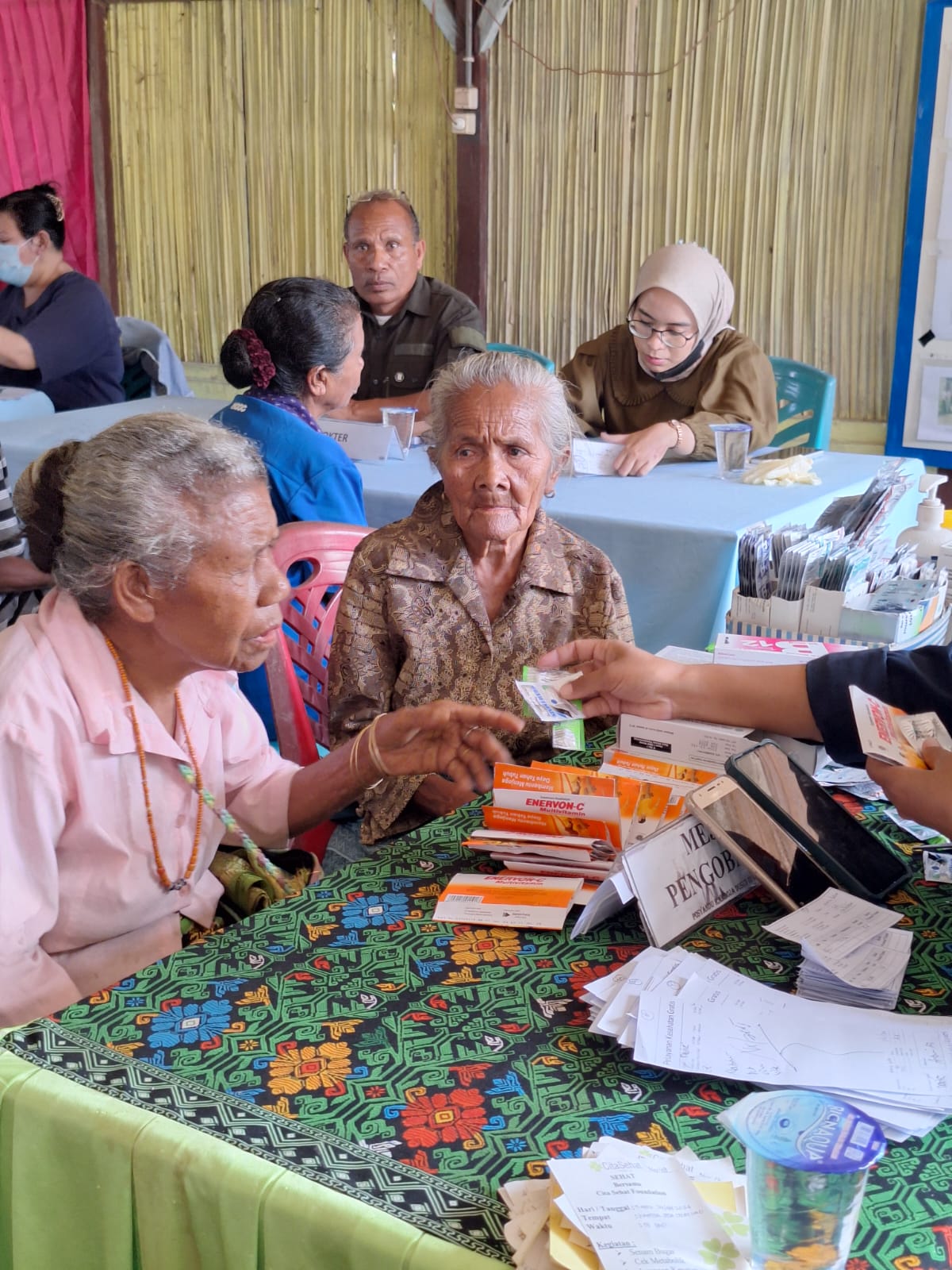
In eastern Indonesia, many villages have poor access to hospitals and primary health centers. For example, only about 27% of villages in Maluku, Nusa Tenggara, and Papua have easy access to hospitals, compared to more than 90% in Java-Bali. This is exacerbated by frequent shortages of essential medicines in primary health centers in these areas.
These underserved areas are home to the most economically vulnerable communities, who are heavily dependent on free medicines provided by primary health care facilities⁵.
Inadequate quality of healthcare services
The quality of health services can be seen from various aspects, such as the completeness of facilities, service costs, health workers, room comfort, and service speed. Based on household assessments of community health center services and their networks accessed over the past year, only one province in eastern Indonesia has a score above the national average, namely Gorontalo. Meanwhile, the provinces of Central Sulawesi, Papua, Central Papua, and Papua Pegunungan have not met all indicators. This indicates the need to improve health services for communities in these areas so that health equity is no longer just a slogan.
Table 2. Assessment of Community Health Center Services and Networks in Eastern Indonesia
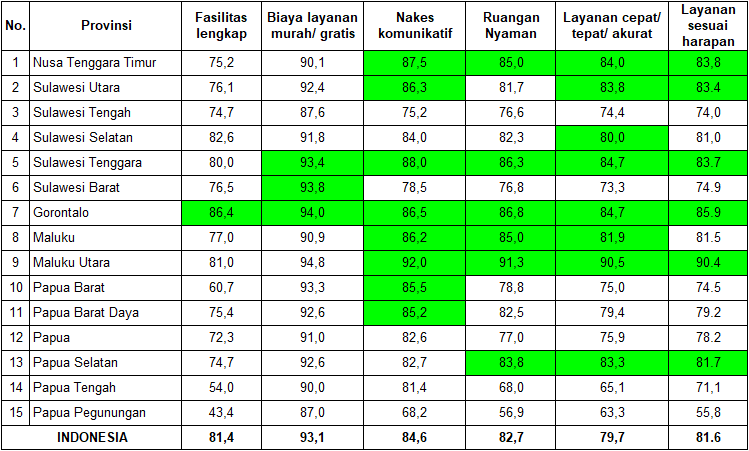
Note: Green indicates indicators above the national average.
Source: Survei Kesehatan Indonesia 2023
High Rates of Infectious Diseases
Eastern Indonesia bears a heavy burden of infectious diseases such as malaria, tuberculosis, HIV, respiratory infections in infants, and diarrhea⁶. Malaria remains endemic in many regions, complicating public health efforts and hindering overall health improvements.
These diseases directly cause serious complications and even death. Indirectly, they hamper economic development, increase household spending on health, and disrupt the quality of life and productivity of communities.⁶,⁷.
Geographic Challenges
Eastern Indonesia faces serious geographical challenges that limit access to health services. Scattered islands, long distances to facilities, and minimal transportation infrastructure make it difficult for people to reach health centers or hospitals, even for basic services. Many residents must travel long distances, including by boat, resulting in delays in treatment, especially in emergencies and for pregnant women. Although healthcare services are often subsidized, the cost and time involved in travel remain major obstacles.
In addition, the scarcity of medical personnel in remote areas exacerbates the situation. Health centers on small islands often lack doctors and midwives, and it is difficult to recruit and retain health workers in these locations. As a result, health inequalities are widening, with high rates of maternal mortality, child malnutrition, and infectious diseases⁸,⁹.
Eastern Indonesia requires affirmative policies and greater investment in the health sector, ranging from infrastructure improvements and redistribution of medical personnel to empowerment of local communities. A data-driven approach based on local context must be the foundation for designing sustainable and inclusive health interventions..
Writer:
Susilowati S.Gz, Head of Program
References
- Oktaria V, Mahendradhata Y. The health status of Indonesia’s provinces: the double burden of diseases and inequality gap. Lancet Glob Health. 2022;10(11):e1547-e1548. doi:10.1016/S2214-109X(22)00405-3
- Badan Kebijakan Pembangunan Kesehatan, Kementerian Kesehatan RI. Survei Kesehatan Indonesia Tahun 2023 Dalam Angka. Jakarta: Kementerian Kesehatan RI; 2023. Accessed August 4, 2025. https://kemkes.go.id/app_asset/file_content_download/17169067256655eae5553985.98376730.pdf
- Institute for Health Metrics and Evaluation. Indonesia | Health by Location. Healthdata.org. Published year not specified. Accessed August 4, https://www.healthdata.org/research-analysis/health-by-location/profiles/indonesia
- Indonesia Timur. Definisi Indonesia Timur. co. Published year not specified. Accessed August 5, 2025. https://indonesiatimur.co/definisi/
- Fanda RB, Probandari A, Yuniar Y, Hendarwan H, Trisnantoro L, Jongeneel N, et al. The availability of essential medicines in primary health centres in Indonesia: achievements and challenges across the archipelago. Lancet Reg Health Southeast Asia. 2024;22:100345. doi:10.1016/j.lansea.2023.100345
- Badan Kebijakan Pembangunan Kesehatan, Kementerian Kesehatan RI. Survei Kesehatan Indonesia (SKI) Tahun 2023 dalam Angka. Jakarta: Kementerian Kesehatan RI; 2023. Accessed August 5, 2025. https://www.kemkes.go.id/resources/download/info-terkini/SKI_2023_Dalam_Angka.pdf
- Loasana NA. Indonesia faces uphill battle to eliminate malaria in eastern regions. The Jakarta Post. Published May 1, 2024. Accessed August 5, 2025. https://www.thejakartapost.com/indonesia/2024/05/01/indonesia-faces-uphill-battle-to-eliminate-malaria-in-eastern-regions.html
- Leosari Y, Uelmen JA, Carney RM. Spatial evaluation of healthcare accessibility across archipelagic communities of Maluku Province, Indonesia. PLOS Glob Public Health. 2023;3(3):e0001600. Published 2023 Mar 9. doi:10.1371/journal.pgph.0001600
- Mangoma, Joyce and Sulistiadi, Wahyu (2024) “Island Health Crisis: Bridging Gaps in Indonesia’s Healthcare Deserts,” Journal of Indonesian Health Policy and Administration: Vol. 9: No. 2, Article 5. DOI: 10.7454/ihpa.v9i2.1005