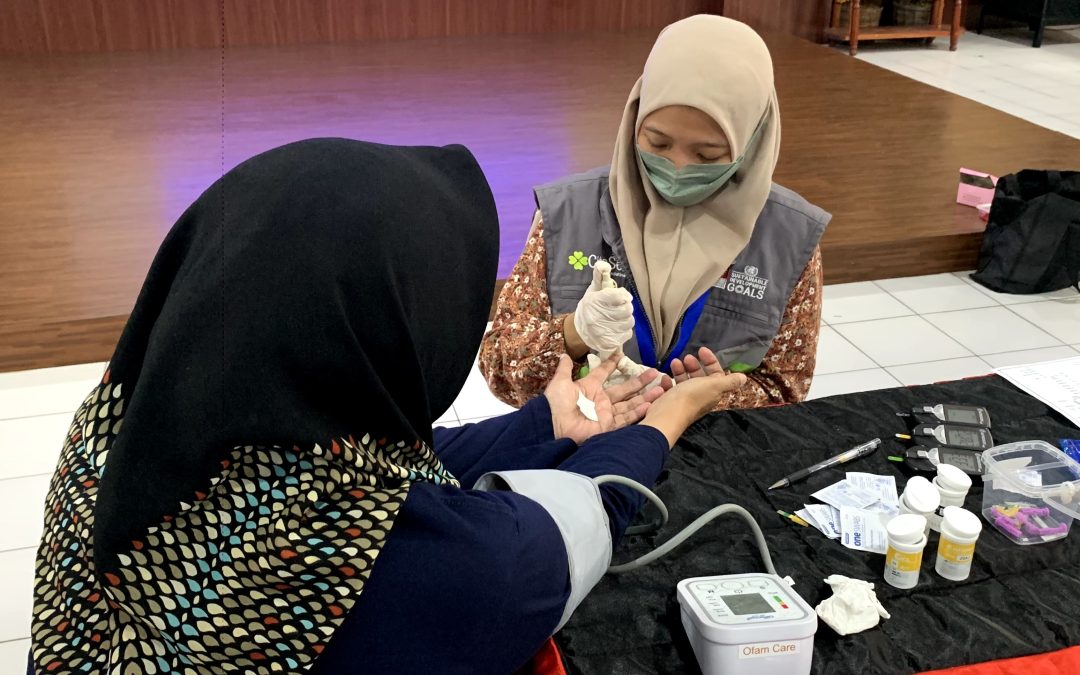

A reflection by Cita Sehat on the latest nutrition labeling policy and the long road that still lies ahead for us to travel together with the public.
Indonesia Is Slowly Slipping Away
There is one statistic that should make us pause for a moment: 73 percent of deaths in Indonesia are caused by noncommunicable diseases (NCDs). Diabetes, hypertension, heart disease, stroke, cancer, and kidney failure—not viruses, not natural disasters, but the lifestyles we choose, continue, and pass on every day.
The data is persistent and continues to rise:
- The prevalence of obesity among adults rose from 21.8% (2018) to 23.4% (2023), affecting nearly one in four Indonesian adults.
- The prevalence of hypertension among people aged 18 and older reached 34.1%.
- The prevalence of diabetes mellitus ranges from 8.5% to 10.9%, and the age of those affected continues to shift toward younger age groups.
- Most concerning, according to Riskesdas, is that only 3 out of 10 people with NCDs are aware that they have the disease.
Seven out of ten were walking home from the store, from the office, or from their children’s school, unaware that something was happening inside their bodies that would, one day, permanently change their lives and those of their families.
It is in this context that the Nutri-Level policy was introduced in Indonesia in April 2026, and it is also in this context that we need to be honest: labeling alone will not be enough.
What Exactly Is Nutri-Level?
Nutri-Level is a front-of-pack nutrition labeling system that categorizes products based on their sugar, salt, and fat (SSF) content into four color-coded levels:
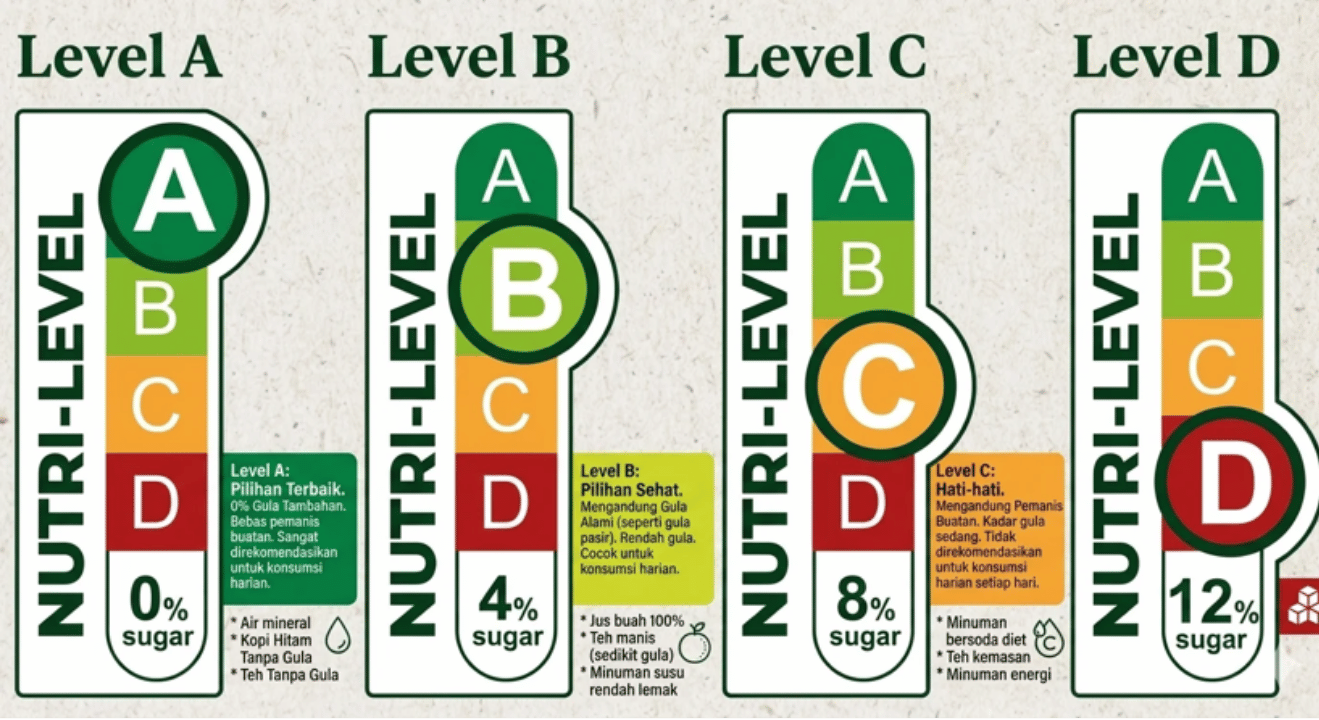
The logic is similar to that of a traffic light. Consumers can get a quick glance while shopping, without having to turn the packaging over and calculate the figures per 100 grams. The government, through the Ministry of Health, is implementing this policy in phases: a two-year voluntary transition period, followed by mandatory compliance for large businesses, including fast-food restaurants, trendy beverage outlets, catering services, and modern retail stores.
The intention is good. The direction is right. But this is where we need to be skeptical as public health professionals.
Criticism That Should Not Be Overlooked
On April 17, 2026, the Center for Indonesia’s Strategic Development Initiatives (Cisdi), through Food Policy Analyst Ika Nindyas Ranitadewi, published a sharp critique in Kompas, stating that the current design of Nutri-Level risks failing to sufficiently change behavior.
Three important points to keep in mind:
First, nutrition labels do not necessarily change decisions. Global studies show that nutrition labeling does raise awareness, but its impact on consumption behavior is limited if the labels do not provide clear risk warnings. Consumers who are already hesitant will remain so; consumers who are indifferent will not be swayed simply by the color yellow.
Second, there is a dangerous gray area. Products with high GGL content can still fall into Category C (yellow) and be considered “pretty safe” by the average consumer. Yet “yellow” here is a warning, not a green light. Without explicit warning labels such as “High Sugar” or “Excess Salt”—as implemented in Chile—the risk message falls flat.
Third, the voluntary nature of the policy undermines transparency. If the policy is not mandatory, only manufacturers with good nutritional profiles will use labeling as a marketing tool. The products that most need to be labeled—those high in GGL—will quietly avoid doing so. The entire system risks becoming a showcase rather than a warning sign.
Chile’s experience shows that new warning labels are effective when combined with advertising restrictions, school environment regulations, and fiscal policies such as a tax on sugary drinks. Labels are one tool among many—not the only solution.
The Missing Link: Humans, Not Just Products
This is where we must be honest as a nation. Product labeling is an important upstream measure, but it does not address the core of the problem. Because NCDs are not a product issue. NCDs are a matter of lifestyle, social environment, access to information, and gaps in nutrition literacy.
Some questions that the label cannot answer:
- What about mothers in remote areas who shop at traditional markets, where there are no Nutri-Level-labeled packages?
- What about workers who eat at roadside food stalls every day?
- What about schoolchildren who buy snacks at the cafeteria without any nutrition labeling?
- What about older adults who have high blood pressure but have never been checked by a doctor?
- What about families who know their food is high in sugar but don’t have any affordable alternatives?
Labels are a symptom. The root cause is actually people. And people aren’t changed by labels; they’re changed by consistent education, patient guidance, a supportive environment, and equal access.
This is the area we’ve occupied at Cita Sehat for the past 17 years. For 17 years, we have been working in this field through five pillars—community-based nutrition education, early screening for NCD risk factors, family nutrition gardens, NCD-friendly support for the elderly, and cross-generational stunting prevention. Our goal is not to replace the government’s role, but to ensure that policies truly reach the dinner tables of Indonesian families.
Additional Tips for You or Your Family Members Who Have Been Diagnosed with NCDs
If you already diagnosed with NCD, the main focus is on managing the condition, including by:
- Take medication regularly as prescribed by your doctor,
- Follow a healthy diet,
- Engage in safe physical activity,
- Schedule regular checkups at a healthcare facility,
- Avoid exposure to hazardous substances, such as carcinogens.
Sumber:
- Kompas, “Tingkatkan Kesadaran Konsumen, Nutrilevel Mesti Disertai Label Peringatan” (17 April 2026)
- Survei Kesehatan Indonesia (SKI) 2023, Kementerian Kesehatan RI
- Riskesdas 2018, Kementerian Kesehatan RI
- WHO NCD Country Profile Indonesia 2018
- Center for Indonesia’s Strategic Development Initiatives (Cisdi)
- Cita Sehat Foundation, citasehat.org