
Lifestyle and the Prevalence of NCDs in Indonesia
Kalau kita perhatikan pola kematian di Indonesia dua dekade terakhir, ada pergeseran besar yang sebenarnya jarang dibicarakan di ruang publik. Dulu, penyakit infeksi seperti diare, TBC, atau malaria menjadi penyebab kematian terbesar. Sekarang, justru penyakit tidak menular (PTM) seperti jantung, stroke, diabetes, kanker, dan hipertensi yang mendominasi. Kementerian Kesehatan RI bahkan menyebutkan bahwa sekitar 75 persen kematian di Indonesia saat ini disebabkan oleh PTM. Artinya, dari setiap empat orang yang meninggal, tiga diantaranya kemungkinan besar meninggal karena penyakit yang sebetulnya bisa dicegah.
This phenomenon is known as the epidemiological transition, and its primary cause is not an epidemic or a pathogen, but rather something much closer to our daily lives: lifestyle. This article seeks to provide an overview of the current situation regarding NCDs in Indonesia—their origins, their impact, and the steps that can be taken—including how Cita Sehat positions itself at the forefront of promotive and preventive efforts.
An Overview of the Prevalence of NCDs in Indonesia
The most recent data comes from the 2023 Indonesian Health Survey (SKI), released by the Health Development Policy Agency of the Indonesian Ministry of Health. Some of its key findings:
- Hypertension: The prevalence, based on blood pressure measurements among people aged 18 and older, was recorded at 30.8 percent in 2023, a slight decrease from 34.1 percent in the 2018 Riskesdas survey. However, there is a significant gap between those diagnosed and those who actually have the condition: only about 8 percent of the population is aware that they have hypertension, while measurement results show a much higher rate. Many people have “silent hypertension” without realizing it.
- Diabetes mellitus: The prevalence, based on blood glucose tests among those aged 15 and older, rose from 10.9 percent (2018) to 11.7 percent (2023). As with hypertension, diagnostic awareness remains very low compared to the findings of direct testing.
- Obesity: The prevalence of obesity among adults (ages 18 and older) rose from 21.8 percent (2018) to 23.4 percent (2023), with central obesity (excessive waist circumference) reaching 36.8 percent among those aged 15 and older.
- Cancer: According to Globocan 2022 data (International Agency for Research on Cancer/WHO) cited by the Ministry of Health, Indonesia records more than 408,661 new cancer cases and approximately 242,000 cancer-related deaths each year. The five most common types of cancer are breast, cervical, lung, colorectal, and liver cancer.
It is important to note that the prevalence of hypertension and diabetes is now shifting toward younger people and those of working age; these conditions are no longer exclusive to the elderly. This is why NCDs are increasingly viewed as a long-term threat to the nation’s productivity.
Lifestyle: The Root of the Problem That Is Often Overlooked
NCDs rarely appears out of the blue. It develops gradually, shaped by habits repeated over many years. SKI 2023 provides a clear picture of this:
- Smoking: 22.46 percent of the population aged 10 and older are daily active smokers, one of the main contributors to heart disease, stroke, lung cancer, and chronic obstructive pulmonary disease.
- Insufficient physical activity: Only 62.6 percent of the population aged 10 and older gets enough physical activity, meaning about one-third of the population is physically inactive. The most commonly cited reason is “no time” (48.7 percent), reflecting an increasingly sedentary urban lifestyle.
- Insufficient fruit and vegetable intake: As many as 96.7 percent of the population aged 5 and older consume less fruit and vegetables than the daily recommended amount—a very high figure that is often overlooked.
- Excessive consumption of sugar, salt, and fat: Driven by urbanization, easy access to processed and fast food, and relatively affordable packaged sugar-sweetened beverages.
The combination of these factors creates a self-reinforcing cycle: an unbalanced diet leads to obesity, obesity leads to insulin resistance and high blood pressure, and both pave the way for heart disease, stroke, kidney failure, and certain types of cancer.
An Impact That Cannot Be Taken Lightly
The impact of NCDs does not stop at the individuals who suffer from them. Economically, this burden is very real and continues to grow. Data from BPJS Kesehatan shows that claims for eight catastrophic illnesses (dominated by NCDs such as heart disease, cancer, stroke, and kidney failure) reached approximately Rp34.7 trillion in 2023, a sharp increase from Rp24.05 trillion in 2022. Heart disease alone accounted for approximately Rp17.6 trillion—more than half of the total costs—making it the largest catastrophic burden within the National Health Insurance system.
At the household level, NCDs often mean long-term medical costs, loss of work productivity, and a gradual decline in quality of life. At the national level, NCDs affecting the working-age population threaten the demographic dividend that has long been touted as Indonesia’s major asset leading up to 2045. The health of today’s workforce will greatly determine Indonesia’s competitiveness in the coming decades.
It’s Time to Make Promotive and Preventive Measures a Priority
The World Health Organization (WHO), through its “best buys” concept, emphasizes that preventing NCDs is far more cost-effective than treating them. Some interventions that have proven to be effective and affordable include raising taxes on cigarettes and sugar-sweetened beverages, limiting salt intake, promoting physical activity, and early detection through routine screening.
Indonesia is actually already moving in this direction. Some steps currently underway include:
- The Healthy Living Community Movement (Germas), launched in 2016, encourages the public to adopt the “CERDIK” behaviors (Get regular health checkups, Avoid cigarette smoke, Be physically active, Eat a balanced diet, Get adequate rest, Manage stress) and the “PATUH” guidelines for people with NCDs.
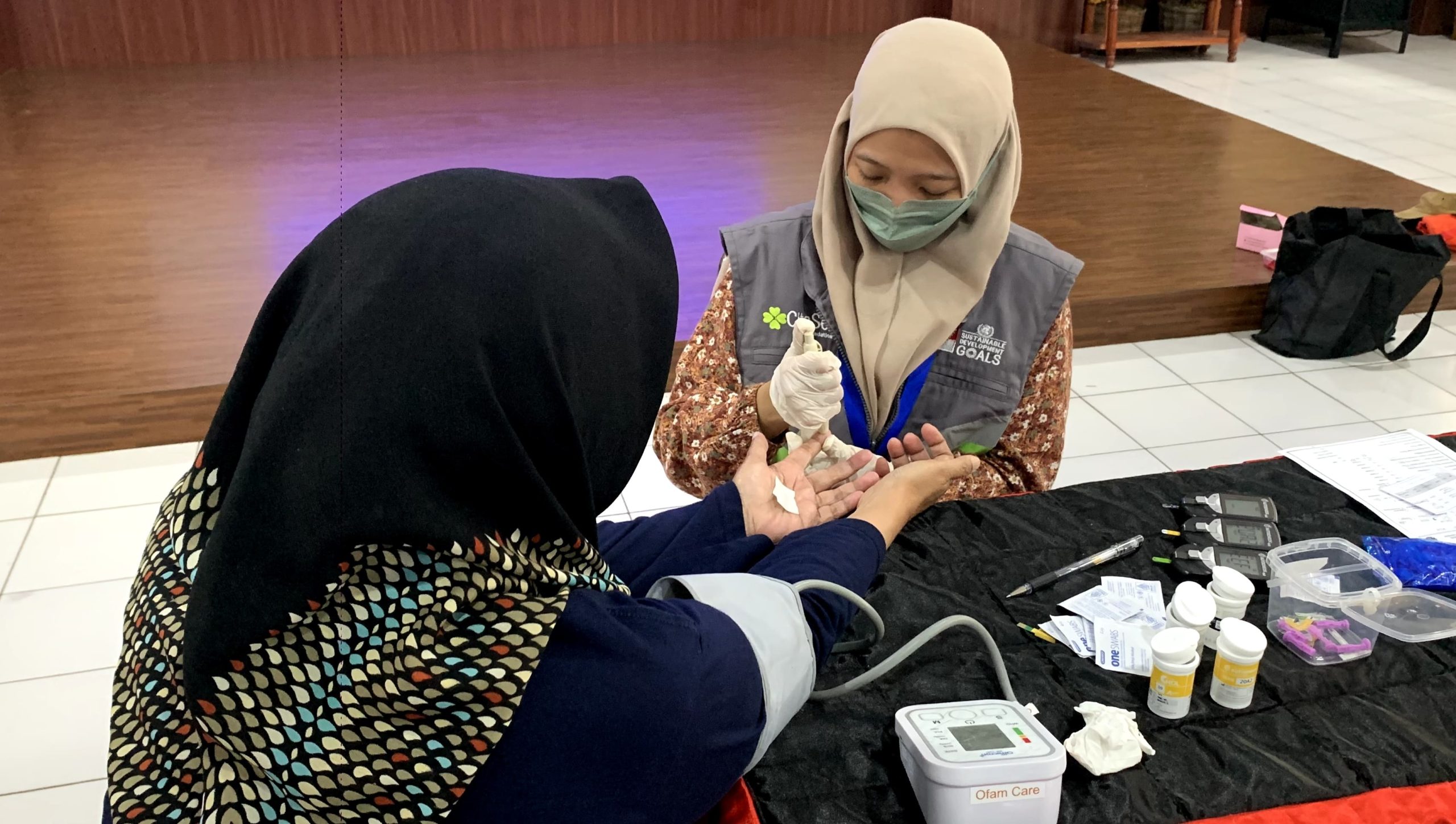
- Posbindu NCDs, an integrated community-level health monitoring post for the early detection of risk factors such as blood pressure, blood sugar, and waist circumference.
- The Free Health Check Program (CKG), launched by the Ministry of Health in February 2025, has reached more than 73.8 million participants, making it one of the largest mass screening efforts ever undertaken by the government to detect NCDs at an early stage.
- Plans to implement a tax on packaged sugar-sweetened beverages (MBDK), scheduled to take effect in 2026, as a fiscal instrument to curb excessive sugar consumption.
At the individual level, the steps are actually simple but require consistency: maintaining a balanced diet with enough fiber, being physically active for at least 30 minutes a day, quitting smoking or not starting, getting enough sleep, managing stress, and getting regular health checkups even if you feel healthy. Precisely because NCDs are often asymptomatic in the early stages, routine checkups are key to early detection.
Cita Sehat’s Response: Strengthening Promotive and Preventive Measures at the Grassroots Level
As an organization dedicated to public health empowerment, Cita Sehat views the urgency of NCDs as a call to strengthen two pillars that have long been neglected in our health system: health promotion and prevention. The four pillars of public health—promotion, prevention, treatment, and rehabilitation—are indeed complementary, but preventing disease before it occurs is far more impactful and cost-effective than treating it once it has become severe.
In practice, Cita Sehat puts this commitment into action through several initiatives. Through the Cita Sehat Clinic network, which spans seven cities across six provinces, health screening services serve as the gateway to early detection of NCD risk factors within the community. The Healthy Seniors Movement program provides free health checkups and regular exercise sessions for the elderly—the group most vulnerable to hypertension and diabetes. Meanwhile, the Health Action program reaches remote areas and emergency situations where access to basic health services has historically been difficult, offering education on healthy lifestyles and NCD screenings.
Cita Sehat is also active in public nutrition education, including through a campaign to raise awareness of the Nutri-Level label on food packaging, so that people can more easily choose products with lower sugar, salt, and fat content. This approach aligns with the spirit of Germas and the WHO’s “best buys” concept—that is, changing the environment and daily habits so that healthy choices become easy to make, rather than merely recommendations without systemic support.
For Cita Sehat, reducing the prevalence of NCDs is not the responsibility of any single party. It requires collaboration between the government, the private sector, communities, and individuals themselves. Therefore, opportunities for partnership remain wide open—whether through health-related CSR programs, volunteering, or other forms of support—to collectively expand the reach of health screenings and healthy living education to more regions across Indonesia.
Closing Remarks
The figures above are not meant to scare anyone, but rather to serve as a reminder that NCDs are largely preventable diseases—not an inescapable fate. Major changes often start with small steps: taking the stairs instead of the elevator, cutting back on sugary drinks, making time for a walk, or simply getting your blood pressure checked regularly. When these small steps are taken collectively—by individuals, families, communities, and organizations like Cita Sehat—a healthier future for Indonesia is not just a hope, but an achievable goal.
References
- Health Development Policy Agency, Ministry of Health of the Republic of Indonesia. 2023 Indonesia Health Survey (SKI) – Key Findings and NCD Fact Sheet. (https://www.badankebijakan.kemkes.go.id/hasil-ski-2023/)
- Databoks/Katadata (2024). “Indonesia’s Hypertension Prevalence Drops to 30.8% in 2023” (https://databoks.katadata.co.id/layanan-konsumen-kesehatan/statistik/8a60c7f555dd1ac/prevalensi-hipertensi-indonesia-turun-jadi-308-pada-2023) and “Indonesia’s Diabetes Prevalence Rises to 11.7% in 2023,”(https://databoks.katadata.co.id/layanan-konsumen-kesehatan/statistik/8a95a31a9cb29b4/prevalensi-diabetes-indonesia-naik-jadi-117-pada-2023) based on 2023 SKI data.
- International Agency for Research on Cancer (IARC)/WHO, Globocan 2022, cited in the Framework for Cancer Prevention and Control, Ministry of Health of the Republic of Indonesia.
- BPJS Kesehatan. Data on catastrophic illness claims under the JKN program for 2022–2023, as reported by Tribunnews and Dataindonesia.id.
- Ministry of Health of the Republic of Indonesia. Free Health Check-up Program (CKG), 2025.
- Ministry of Health of the Republic of Indonesia. Healthy Living Community Movement (Germas), ayosehat.kemkes.go.id.
- VOA Indonesia (2024). “Ministry of Health: 75 Percent of Deaths in Indonesia Are Due to Noncommunicable Diseases.”
- World Health Organization. “Best Buys” for the Prevention and Control of NCDs.
- Cita Sehat Foundation, citasehat.org – program profiles and health services