
A reflection by Cita Sehat on the latest nutrition labeling policy and the long road that still lies ahead for us to travel together with the public.
Cita Sehat’s Standpoint: Focusing on Primary Care Before Clinics Become Overcrowded
Cita Sehat was founded in 2008 with a simple yet firm belief: prevention is far more cost-effective, humane, and sustainable than treatment. We are active in all four pillars of public health—promotive, preventive, curative, and rehabilitative. However, as a health NGO, our primary focus is on promotive and preventive care, while our clinics and ambulance services support the curative and rehabilitative aspects.
Why has this focus become even more relevant precisely since the publication of Nutri-Level?
Because Nutri-Level is a tool, Cita Sehat serves as the link that translates that tool into tangible behavioral change within communities—especially those most often overlooked by formal market-based policies.
Five Action Areas of Cita Sehat in the Context of NCDs (Noncommunicable Diseases)
1. Community-Based Nutrition Education
Nutri-Level will be effective if the public knows how to read and understand it. Cita Sehat translates the labels from the language on the packaging into language that families can understand through posyandu, mothers’ groups, health volunteers, schools, and places of worship. We don’t wait for people to come to us; we go to them.
2. Early Screening for Risk Factors for NCDs
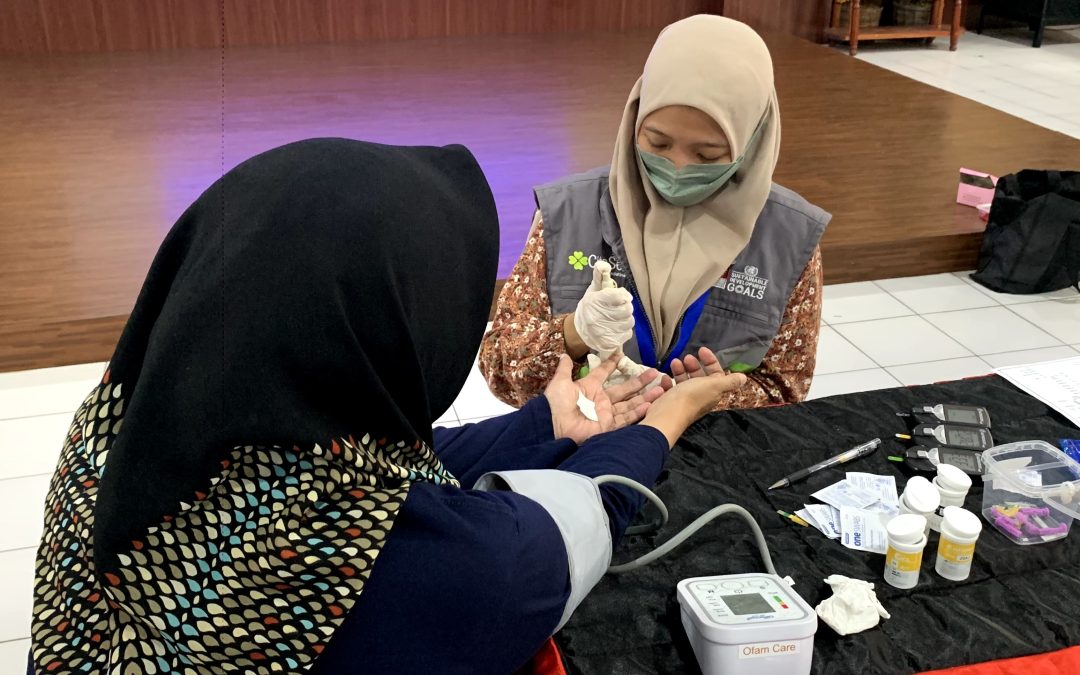
Seven out of ten people with NCDs are unaware that they are sick. Cita Sehat bridges this gap through Aksi Sehat, a mobile health service that provides screenings for blood pressure, blood sugar, body mass index, and waist size, in areas not served by formal health facilities. Before Nutri-Level comes to the rescue, early detection saves lives first.
3. Family Nutrition and Food Security Gardens
Reducing consumption of ultra-processed foods isn’t enough; there must be alternatives. The Nutrition Garden Program empowers families to grow vegetables and fruits in their backyards, shifting consumption patterns from ultra-processed foods to fresh, locally grown produce. This is a structural intervention, not just advice.
4. Support for Older Adults with Chronic Diseases
Older adults are the group with the highest burden of NCDs. The Cita Sehat Senior-Friendly Program combines exercise, nutrition education focused on reducing saturated fat intake, routine blood pressure monitoring, and psychosocial support. The goal is not to prolong life in a wheelchair, but to extend a productive, high-quality life.
5. Addressing Stunting as a Long-Term Investment
Though rarely linked, the scientific evidence is strong: children who are stunted are at higher risk of obesity and NCDs in adulthood. Breaking the cycle of stunting today means stemming the tide of NCDs 20 years from now. This is a promotive-preventive approach that spans generations.
Why Does Cita Sehat Need to Play a Role in the Nutri-Level Era?
The government has regulatory power. Industry has production scale. But the two converge at a point that is often overlooked: households, small shops, schools, and villages. It is at this point that policy either becomes a reality or remains mere rhetoric.
Cita Sehat positions itself in this role is not to replace the government, but to bridge the gap between policy and everyday life. When the Ministry of Health launched Nutri-Level, Cita Sehat put it into practice. While the industry was still in a voluntary transition phase, Cita Sehat had already gone into villages to build nutrition literacy. Even before labeling became mandatory, we were already teaching families how to read existing nutrition labels.
Our position is clear: we are a community-based promotive-preventive organization that works to reach the most vulnerable and collaborates with the government, corporations, and philanthropic organizations to suppress the NCD curve in Indonesia.
No One Can Do It Alone
We deliver this message not as a report, but as an invitation.
To the government: Nutri-Level needs to be strengthened immediately with explicit warning labels, expedited to become mandatory, and supplemented with restrictions on advertising to children. But regulations without community enforcement will remain ineffective. Let’s work together to close that gap.
To the business community: In-person learning poses a threat to the productivity of Indonesia’s workforce. Invest in promotive and preventive programs. Whether through CSR, partnerships, or employee health programs, these are investments in the future of your own business. Cita Sehat is ready to serve as an accountable implementation partner.
To the public: Read the labels. Get regular checkups. Cut back on sugar, salt, and fat. Grow whatever you can. Get your neighbors involved. Get your family involved. Change doesn’t happen because of a single label; it happens because of millions of small decisions every day.
To the big family of Cita Sehat—volunteers, community health workers, partners, and donors—thank you for standing on the front lines. Our work is not yet done. In fact, it has only just begun.
“A perfectly healthy Indonesia” is not just a slogan. It is a cross-generational mission—one that begins with labels on packaging, continues to the family dinner table, and is carried out at community health posts, nutrition gardens, and in the living rooms of every Indonesian home.
Cita Sehat
Promotive-Preventive
Rooted in the community. Making an impact across generations.
Source:
- linkedin.com/in/ali-mujianto-3b0587a6
- Kompas, “Tingkatkan Kesadaran Konsumen, Nutrilevel Mesti Disertai Label Peringatan” (17 April 2026)
- Survei Kesehatan Indonesia (SKI) 2023, Kementerian Kesehatan RI
- Riskesdas 2018, Kementerian Kesehatan RI
- WHO NCD Country Profile Indonesia 2018
- Center for Indonesia’s Strategic Development Initiatives (Cisdi)
- Cita Sehat Foundation, citasehat.org